
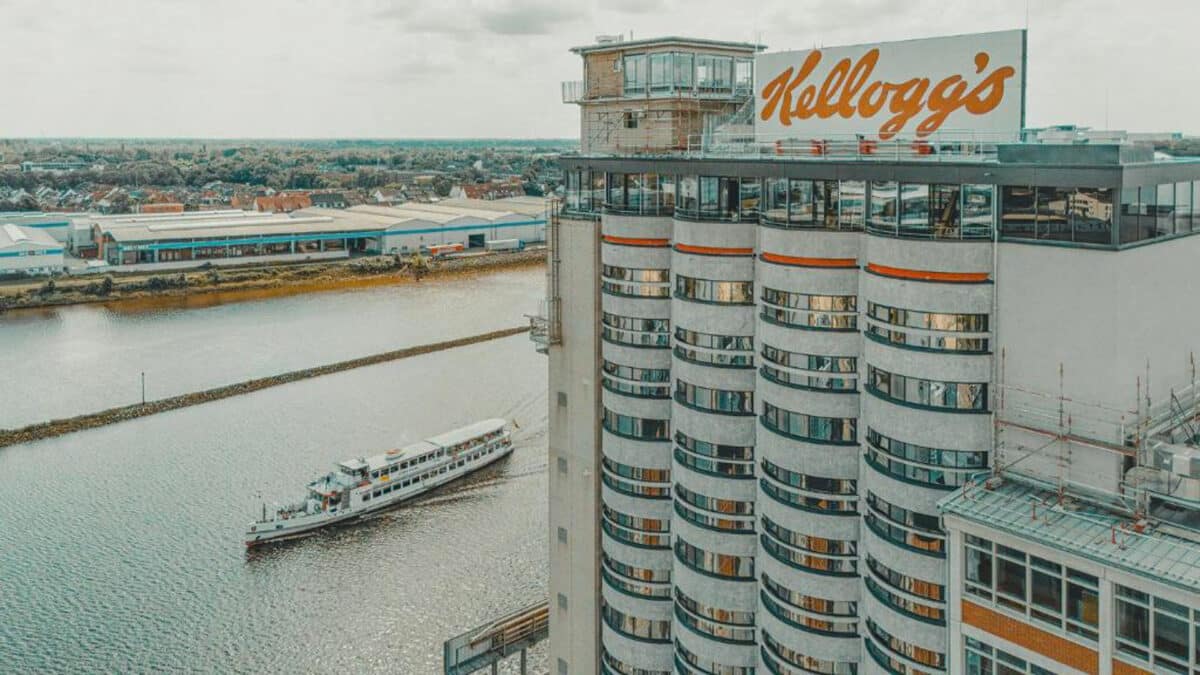
Grain silos, cereal factories, champagne cellars, signal boxes. The appetite for adaptive reuse in boutique hospitality keeps growing. The best new examples are more specific about the original building than ever, and that specificity is what makes them worth the trip.
The conversion hotel has been a feature of boutique hospitality for long enough that the category itself has become mainstream. A Georgian townhouse, a Victorian warehouse, a former monastery: these are now so common that they barely require explanation. The more interesting question is what comes after that, and the answer, increasingly, is buildings that were never supposed to become hotels at all.


The John and Will Silo Hotel by Guldsmeden in Bremen is one of the more striking recent examples. Opened in summer 2024 in a former Kellogg’s cereal factory on the Weser river, the hotel involved the removal of 3,500 cubic metres of concrete from the original grain silos to create 116 circular and semi-circular rooms, each shaped by the curve of the silo walls and each with river views through horizontal bands of windows cut through the original concrete. The architect was Martin Josst of Delugan Meissl Associated Architects. The result won the German Urban Planning Award newcomer prize in 2025, which is the kind of recognition that suggests the building’s second life is doing justice to its first.
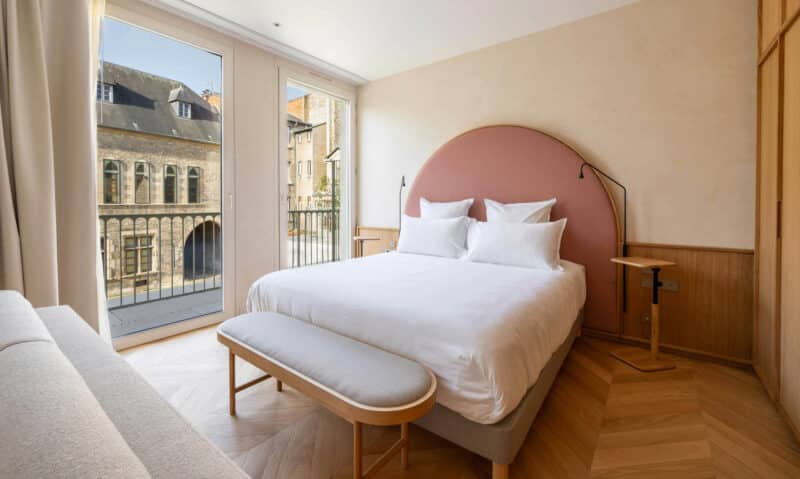
In Reims, Le 3 by Champagne Thienot opened at the end of 2025 as the first boutique hotel for the famed Champagne house, set in a period townhouse with the cellar experience embedded into the stay. It is a different kind of conversion: not industrial but agricultural, and one where the original purpose of the building, the production and ageing of Champagne, remains literally beneath your feet.
What distinguishes the best of these conversions from the merely competent ones is the degree to which the original use shapes the guest experience rather than simply informing the aesthetics.
Staying in a hotel that used to be a cereal factory and knowing it only because a framed photograph says so is one thing. Sleeping in a room whose shape was determined by the curvature of a grain silo, and whose windows were cut through six-inch-thick concrete that once held tonnes of corn and wheat, is another thing entirely. The building’s history is not decoration. It is the architecture.
The pipeline of interesting conversions shows no signs of slowing. The appetite for buildings with a genuine past, and hoteliers with the confidence to let that past do the work, is as strong as it has ever been.