
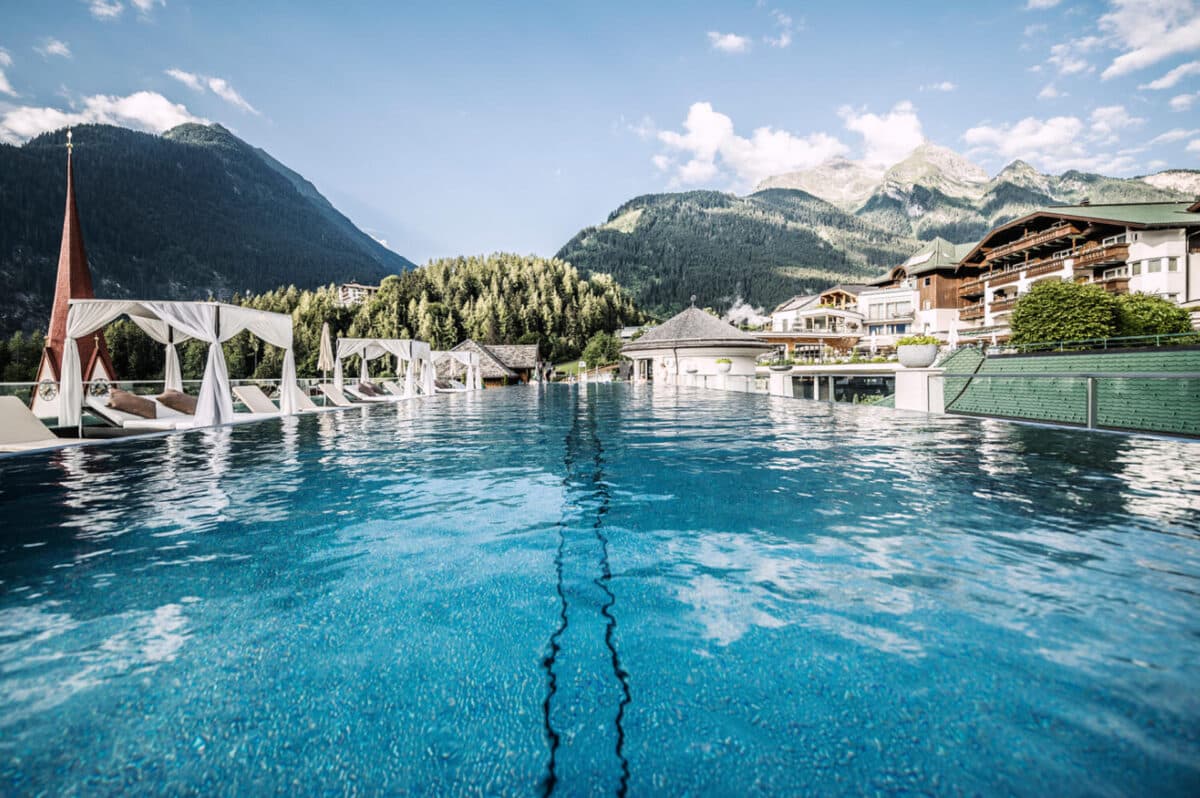
Mountain air, serious spa culture, longevity programming and landscapes that do most of the therapeutic work before you even check in. The Austrian Alps are earning a second look from travellers who would never have considered them outside of ski season.
There is a version of the Alps that most people know: January, ski boots, a vin chaud at the bottom of a run. It is a fine thing. It is also, increasingly, only part of the story.
Something has shifted in how the Austrian Alps are being understood as a travel destination, and the change is more interesting than seasonal marketing usually manages to be. The mountains — the air quality, the altitude, the silence, the quality of light in summer, the access to landscape that genuinely rewards attention — turn out to be exactly what a growing number of travellers are looking for. Not as an aesthetic backdrop, but as the actual point of the trip.
Wellness tourism has matured considerably in the last five years. The earlier version of it, all generic spa menus and vaguely Eastern-inflected treatments in hotel basements, has given way to something more considered: longevity programming, sleep science, movement therapies, hydrotherapy, nutrition built around what the land produces. The Alps, with their thermal water traditions, their serious sauna culture and their access to the kind of landscape that makes people want to walk for six hours and feel nothing but better for it, are a natural fit for all of this. What has changed is the confidence with which alpine properties are making that case.
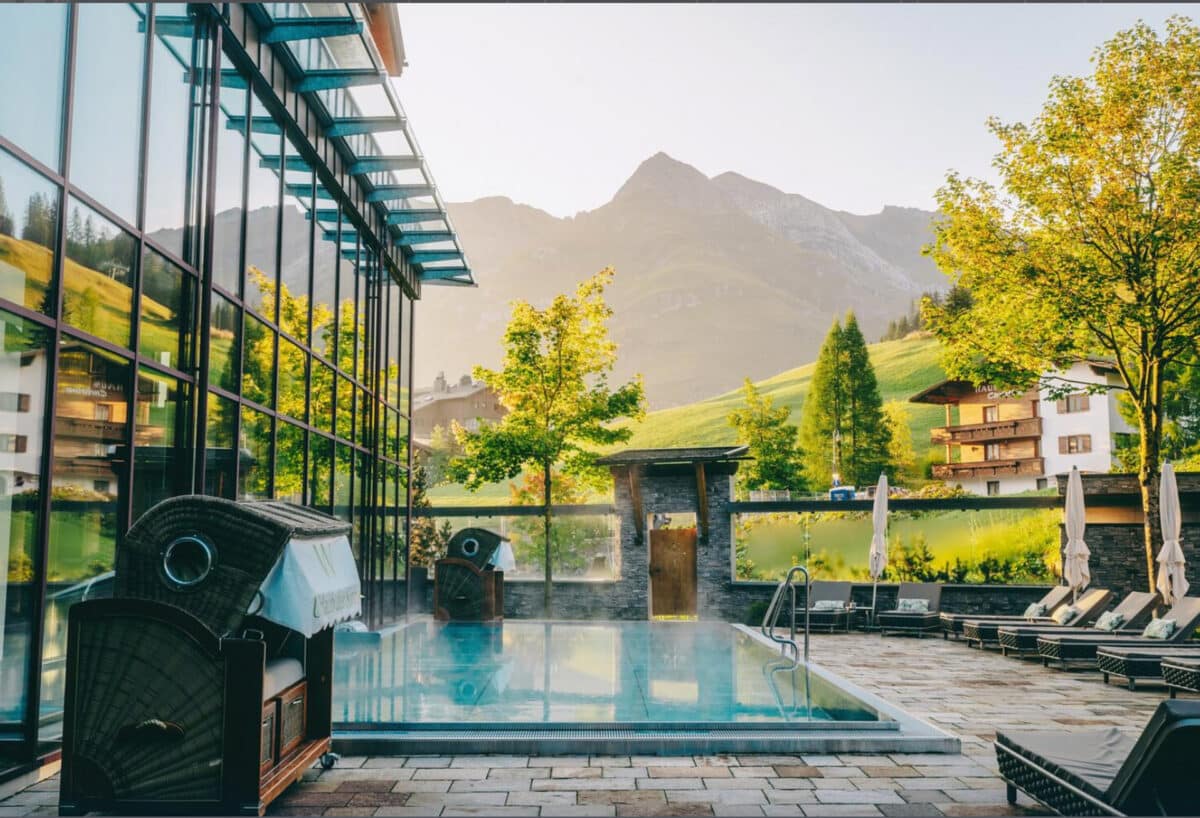
In Austria’s Zillertal valley, Stock Resort has built a wellness offer that sits alongside its ski access rather than below it: yoga, structured movement therapies and spa facilities designed with families and multi-generational travellers in mind, not just post-ski recovery. In the Arlberg, Wellnesshotel Warther Hof combines high-altitude skiing in winter with a year-round programme of sauna rituals and sleep-focused restoration. On the Mieming Plateau in Tyrol, Alpenresort Schwarz integrates longevity and health programming with hiking, golf and outdoor activity in a way that makes the active and the restorative feel like the same impulse rather than competing ones.
The numbers support what the properties are sensing. Bookings for mountain-view accommodation are up significantly year on year, and the demographic driving that growth is younger and more wellness-motivated than the traditional alpine market. More telling still: nearly two thirds of travellers in their twenties and early thirties now plan holidays with a wellness element as a primary consideration, not an add-on.
None of this makes the Alps a different place. It makes them a more honestly described one. The mountains have always had this to offer: altitude, clean air, physical challenge, genuine stillness and a hospitality culture that knows how to take recovery seriously. The ski season just took most of the attention. Summer, and the rest of the year, is catching up.